

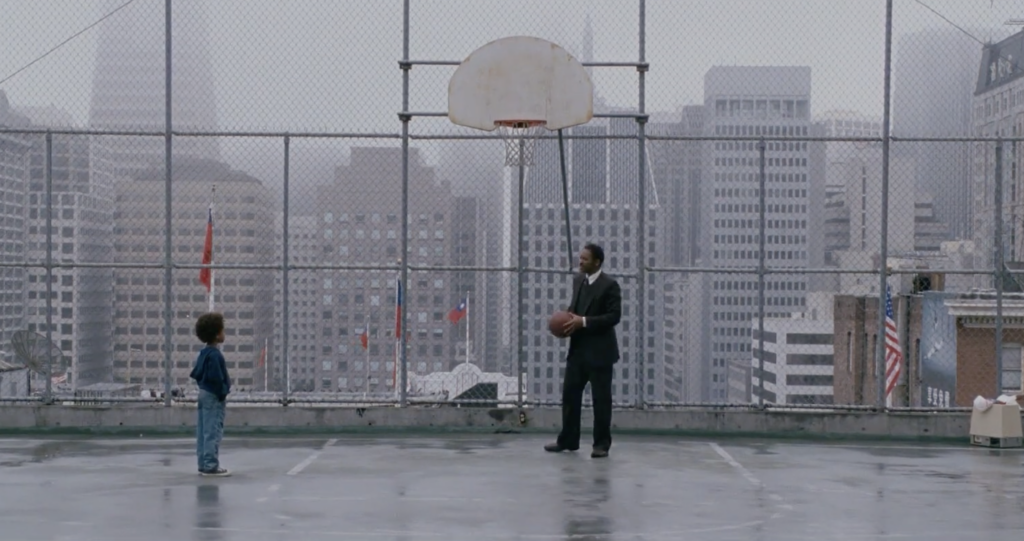
I learned this on a basketball court, and it’s separates them from those that get stuck in failure mode.
I was stuck in my chair, feet up, ice pack under my achilles, while on a zoom call.
Age has finally caught up to me.
My achilles had been hurting from either playing basketball or doing absolutely nothing. I’m learning these phantom injuries come out of nowhere as you get older.
I immediately formed a routine to move on with business as usual. I became restless but found the silver lining. It’s great to have a job that doesn’t require physical strength and is flexible enough to work from home. On the other side of my client calls and podcast interviews, the pain was invisible.
Then a week ago, my foot healed. I was out in the sun, shooting around, playing basketball. I felt so much joy doing something I had taken for granted until I couldn’t do it anymore.
My mood was immediately better after fifteen minutes. I wish I had recovered faster.
I immediately realized a parallel. The same recovery principle determines who succeeds in business and who doesn’t.
It’s not about failure or success. It’s about getting back into the game after being knocked down.
The faster your recovery, the better you are at succeeding
The real success is your ability to bounce back from failure.
The faster you can do this the better.
Athletes call it recovery rate.
But we’re not all playing physical games.
When I injured the heel of my achilles. I was glad I didn’t pop it like I did the one on the other foot, more than a decade ago. I was grateful for that. But what followed were days of hopping around. Icing my heel. Not going outside for a walk. Not being able to exercise. Having to wrap my foot up, and hunt down a new pair of shoes. All this wasn’t drastic.
But I slowly slipped into a dangerous zone.
Where things fail, fall apart, and you accept a new life that you weren’t even aware of.
It’s a silent type of failure – one that you don’t even realize is happening.
It was clear that my body was not at 100%, but I didn’t realize my internal sense of self and my mood had declined.
Until I was able to exercise again. That’s when I saw the lift.
And this isn’t just about physical recovery. The same principle applies to every failure you’ll face in business, relationships, and your career. The longer we stay in decline the harder it is to get back in the game.
The older I get, the more I realize I have to recover faster in other areas of life.
There is so much failure that comes with running a business.
The business people that can recover faster, each day, from each failure, tend to move quicker, and end up being the ones that succeed in the long run.
Even though they fail quite often, they build the muscle to not let a failure tear down their entire day or business.
The reality I’ve found is that these people don’t have the luxury to dwell in failure.
While we hear successful startups tout guts, glory, and growth goals, most business owners are really just trying to stay alive. The name of the game is “don’t run out of cash.” Along the path of not running out of cash are daily failures in the shape of horrible sales calls, clients not paying up, prospects ghosting, credit card bills stacking up.
If they don’t get back in the game, they literally don’t have money to eat and feed their families.
For a few, quick recovery rate comes naturally. For most people, it’s a trained behavior.
I had to learn mine.
Over the years, I’ve learned one of the main reasons for my slow recovery rate when things went bad in my business or projects was simple. It’s how much I attached my self-worth to my ability to perform.
The more my performance was entangled with my self worth, the more I dwelled in failure when things didn’t work out.
I see this across the board with others.
One bad sales call in the morning, your entire day is ruined. One slack message questioning your approach, your identity feels attacked, and you have a horrible week. One session, looking at the list of people who ghosted you by dm, you question your entire life decision that got you here.
With every “bad performance,” you become too hard on yourself, lose sight of what you’re doing, and self-doubt grinds you down.
A brief moment of results turns into a long drought, where you dwell in failure and play victim. That spiralling hole of victimhood only gets deeper and harder to climb out of.
The faster you are at bouncing back from a bad sales call, the quicker you’ll get to the call that becomes a customer. The quicker you recover from the ‘Nos’ you hear often, the quicker you get to the ‘yes’ you need.
But how do you recover when your memory evolved to remember failures more than successes?
It’s not building more willpower. It’s building a system of detachment.
Don’t take it personally
This is what I’m learning on the practice ground: Don’t take it personal.
The sooner you detach your identity from your performance, the better you’ll learn how to recover.
When I started writing on Linkedin about six years ago, I’d write and watch performance on each post. If something did well, I’ll be inspired to do more. If it flopped, I’d retreat. Slow to recover to try again. My recovery rate was tied to my immediate performance. Until I switched it. I developed a new scorecard to build a system of consistency.
That changed everything.
That system allows me to detach the outcome from my self-worth.
It took me years to figure this out, and I still slip back into taking things personally. But the system helps me catch it faster.
I’ve found that building a process-driven system is how you develop an environment for better recovery. It also works with sales and outreach.
You can’t control how people respond, so don’t take it personal.
What you can control is what you put in and measure against. You can only control how you perform compared to your previous self.
Use a system to help you break the self-worth tied to performance. Here is how I’d experiment with that.
Define what’s the one thing you want to do that you usually don’t get to because of a bad experience (e.g. low engagement on posts, no responses from recruiters). Write down the steps to get there.
Build a system to externalize what you will be doing daily. This externalization is the detachment. They are activities you’ll do every day or week in short amounts of time (e.g. 30 minutes of outreach or writing).
Measure the results are in the system, and have your own internal scorecard. As long as you are doing the steps you are winning. Only compare yourself to your previous self. Any other form of comparison would rob you of your joy and put you back in an outcome-performance mode.
Do these activities in 30 to 60-day sprints. Adjust based on what you learn at the end of the sprint.
As long as you are attached to the process, you’ll become more detached from the outcome.
Closing Reflection:
I wish my body recovered faster, but that’s just time doing what it does.
But I’m glad that I can shift that recovery rate to other places where I want to grow. Learning how to communicate better with people. Getting feedback that helps me do better at my business. Hearing a ‘no’ and not taking it as a personal attack. Building out a system of detachment has helped lubricate that friction to get back to the process when things fail.
So here’s the question I have for you today:
“What haven’t you fully recovered from that’s stopping you from taking that next step towards your goal?”
Taking that next step back into your game is probably easier than you think.
Yours truly,
Nifemi
P.S. What’s your recovery system? Reply and tell me one thing you do to bounce back faster from failure.