
Fear is actually not the real issue that holds you back from your goals, it’s something else.
I was sitting in a school bus, driving alongside the river in Colorado.
Tense, as the white water rafting instructor yelled out a series of must-do and safety instructions.
The bus was filled with tourists and thrill seekers. My friends and I sat in front of the bus. The instructor yelled out “Listen up, if you fall into the river, here’s what you do. This is very important.”
I got tighter. “Oh no, people fall into the river often?” I looked outside the bus as the river flowed the opposite direction – the weaving waves, torrents, and brown murkiness of the water. He said, “you see all those signatures,” as he pointed to the inner linings of the bus, the roof, the chairs, the windows, all had different signatures. He completed his statement “those are all people that fell into the river.”
“Jesu…” I swallowed another gulp of fear.
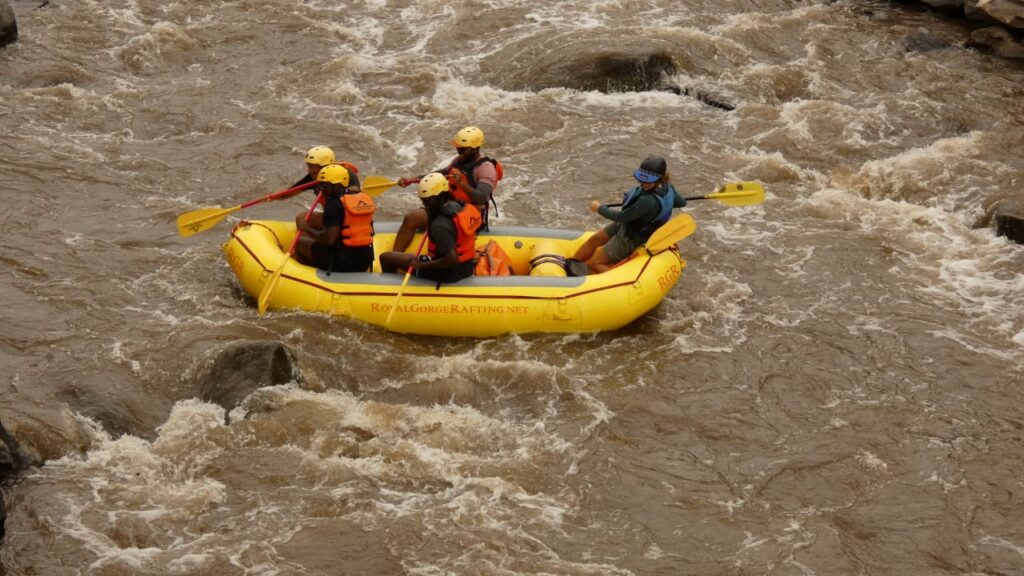
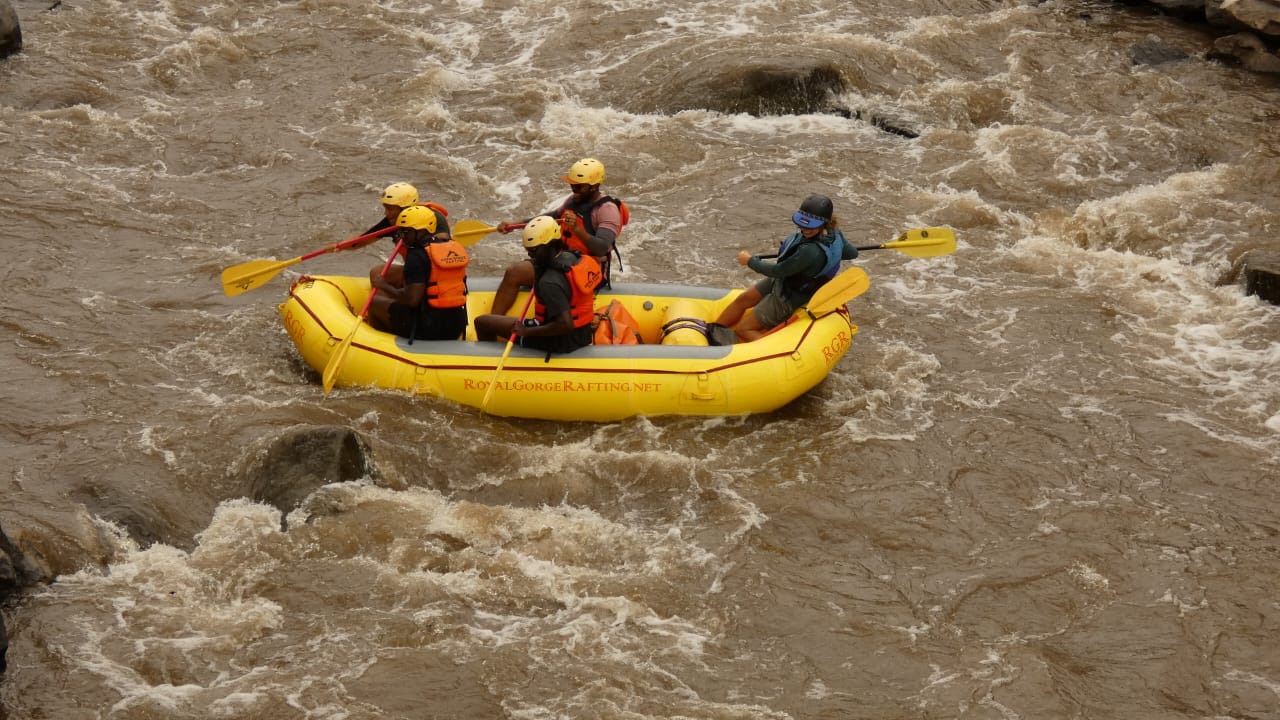
We finally got to it. Four of us and an instructor, we pushed our orange raft into the water and started rolling down stream.
A few bumps here and there. Not so bad. Five minutes later, SPLASH…I was in the water, getting pulled back into the raft.
In a split second, all my fear had come to reality. Water in my mouth, but within a few seconds I was back in the raft, safe, laughing about the incidents with the crew. It ended up being the highlight of the trip.
It taught me an important lesson about the difference between anticipating fear and actual reality.
The fear of failure is nothing compared to the search for guarantees
The search for guarantees is why most people never start.
But before I got dipped, I was scared, even though I had a life jacket on and I was with experts. I wanted something that would say “Nifemi, don’t worry. I guarantee you won’t fall into the water.” It never came. If I hadn’t signed up for the experience with others, perhaps I could have talked my way out of it and headed back to my comfortable Airbnb.
After I fell in, the remaining hour or two of the ride was a breeze.
Everything that I heard on that bus went out of the window once I was in the water. I had a singular focus, to get back on the raft.
What struck me afterwards was simple – I’d spent more energy on anticipatory fear than I spent actually dealing with the situation.
I see the same thing with business owners.
They are filled with war stories. Going through their fear of venturing out brings pain, but it also comes with stories, experience, and laughter. They are aware of their fears. When they overcame them. How it happened.
Going through the process becomes way more interesting than the fear itself.
When I contrast that with people yet to take a chance on building the business they’ve always wanted to, the main thing holding them back is fear. Just like the life guard on the bus prepared us, aspiring entrepreneurs stay stuck on the bus consuming content about how to avoid failure.
They’re not more fearful. They’re searching for guarantees before they start.
But what I’ve learned from failing mid-project is that there are no guarantees.
Waiting for one is the biggest risk to growth, limiting your exposure to interesting experiences.
They have all the playbooks but remain on the sidelines. With each passing day, week, year, they get smart in the mind but never in action. This search for guarantee shows up in different ways – procrastination, falling for distractions, overthinking. Ultimately, it pulls people away from the things they want to achieve. Although, in the moment, it serves a need to protect one’s self from uncertainty, it often has a hidden cost down the line – a latent regret of “what could have been” that’s hard to shake off.
However, there is no case study for guaranteed success.
I’ve learned this through multiple failures: you never really know until you do it.
But like my story on the raft, I didn’t jump into an ocean without having some swimming confidence, a life jacket, or experts around that had dealt with people falling into large bodies of water.
It reminded me of how to improve your chances of a guarantee by testing the waters with small experiments. You don’t jump into the ocean. You get on a raft with a life jacket and experts.
In business, taking little bets is your life jacket.
Building your “little bets” muscle
Here’s what I’m noticing on the practice ground: The fastest way past fear is small experiments with defined boundaries.
I recently built a tool that puts my writing workflow into a repeatable system that makes my work more critical and measurable. I initially developed this to help with my writing but as I built it, I added more features. It was my way to keep learning how to build with AI. When I was done, I asked “would anyone want this?”
Then I started showing it to a few other friends and founders.
One of them asked “oh wow, are you productizing this into a business.” I said “nah, I’m just testing it out.”
I’m not building the next big AI thing or the latest gadget in go-to-market. No. It’s an interesting tool that’s helpful for me, and I’m trying to see whether it’s helpful for 5 other people to start with.
If it works, great. If not, cool. I learned something. It’s a little bet.
One thing I’m not waiting for is a guarantee that this would be the next big business opportunity. So far, it’s a bet that’s already paying off. I’ve learned a new skill and understand how to communicate its value to others. I’ll use that feedback to improve the guarantee of building a more useful tool.
It might be an iteration of the current tool or something entirely different.
This is how I approach little bets:
Define the smallest version – What’s the raft, not the ocean?
Set clear boundaries – It is “Have something to show by the end of the month.” It’s not “build until perfect.”
Prioritize the action, not the outcome – Show 7 people and don’t obsess over whether they all love it.
Use the feedback for the next bet.
This applies to any project.
You want to write the next great book. Awesome. Maybe write a short story, print it, and send it to a few people. You will learn more through that small action than reading about writing a book.
Within a month, try to build a ‘little bet’ project, share it with people, get feedback, and reflect on what you learned.
The goal isn’t perfection out of the gate.
It’s building your “little bets” muscle to get better at taking action without guarantees.
Closing Reflection:
It would have been nice if they told us on that bus ride before we got on the boats, that no one would fall in.
That would have been very comforting. Perhaps, I wouldn’t have worried at all. It ended up being a highlight of the trip. The guarantee I wanted didn’t matter. The action did.
So this is my question for you – what’s one fear you could reduce the stakes on this week with a little bet?
Yours truly,
Nifemi
P.S. I help a handful of technical founders move from planning to execution through fractional growth partnerships. If you’re stuck taking action on GTM, reply “let’s talk.”